

Rule or Reason? Understanding systematic investing in a discretionary world (Brisbane)
Pitcher Partners Wealth Management (Brisbane) | The information in these articles is current as at 20 July 2026
Investors may hear the term ‘systematic’ and feel their eyes gloss over, anticipating a convoluted explanation of how a computer is making all the decisions. The perceived removal of human decision-making drives further scepticism, leading to systematic strategies being viewed under the influence of a cocktail of confusion, boredom and fear. In reality, investors have more exposure to systematic strategies than they would realise. Consider the following framework: a systematic strategy applies a repeatable set of rules, without human judgment, to the investment decision-making process. Under this framework, any passive index-tracking fund or factor-biased portfolio would be considered systematic. Further, this not only highlights the existing exposure in investor portfolios but the breadth of strategies under the systematic banner, ranging from passive index-tracking strategies to the stereotypical ‘black box’ type strategies.
As the (investing) world becomes more data and AI driven, de-mystifying systematic strategies, and understanding the strengths and weaknesses of different types of strategies in the space, is increasingly valuable for investors constructing well diversified portfolios.
The systematic strategy spectrum
Systematic strategies can be considered on a spectrum of increasing complexity. In their simplest form, systematic strategies are index funds that replicate a benchmark. These funds are regularly rebalanced, simply buying and selling securities to mirror those within the index with no discretion required. Despite the simplicity of these strategies, they continue to consistently outperform several complex systematic and qualitatively managed strategies over several time periods.
Beyond passively investing in the market, also known as ‘buying the market factor’, systematic strategies can invest in other well established market factors. The traditional factors such as value, momentum, and quality are grounded in decades of academic research and have been shown to be cyclically related to excess returns. Some strategies extend their approach to invest in multiple factors, lessening the impact when a given factor is out of favour cyclically. Similar to market factor strategies, investing in traditional factors is grounded in economic reality and likely still feels interpretable to everyday investors.
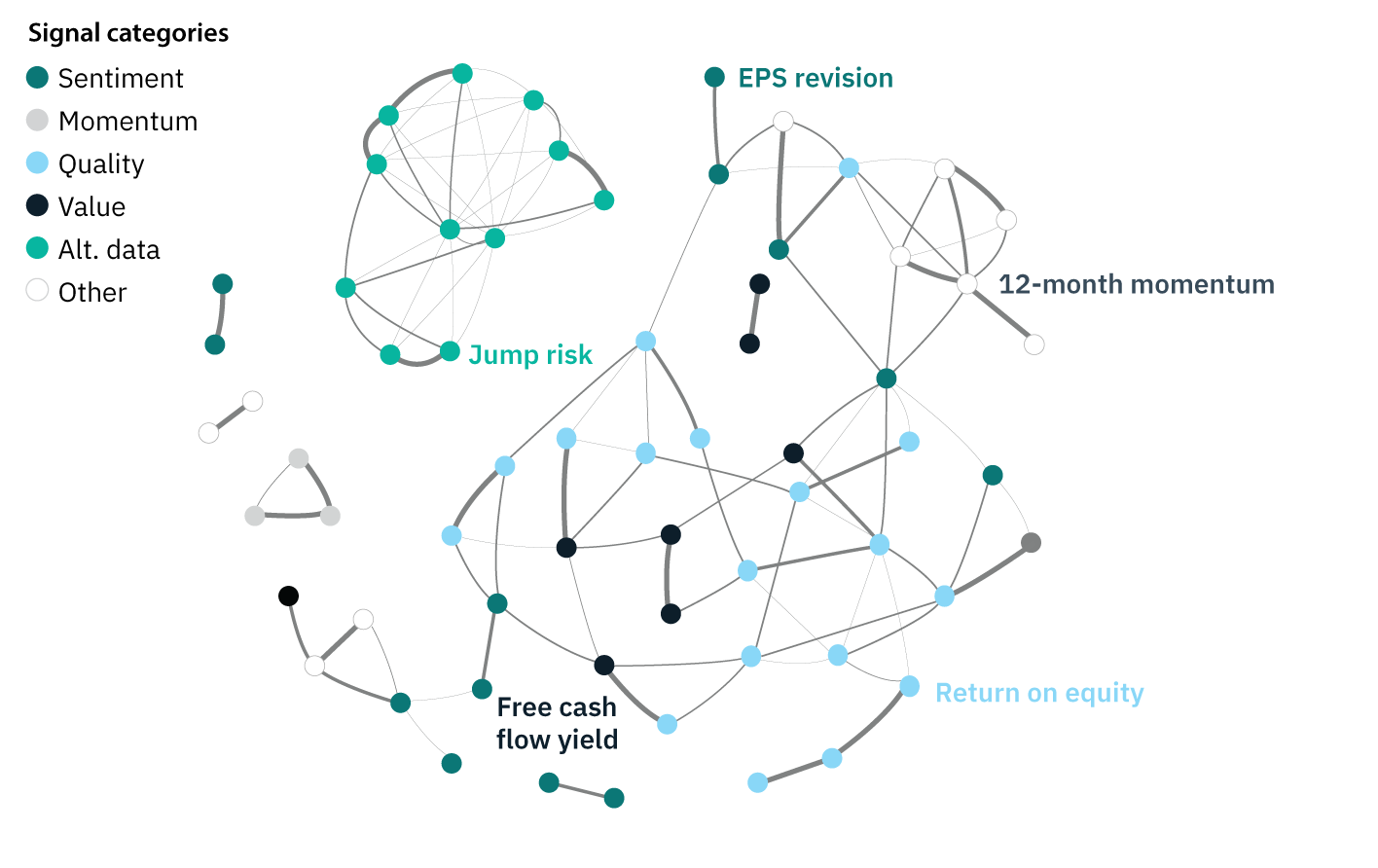
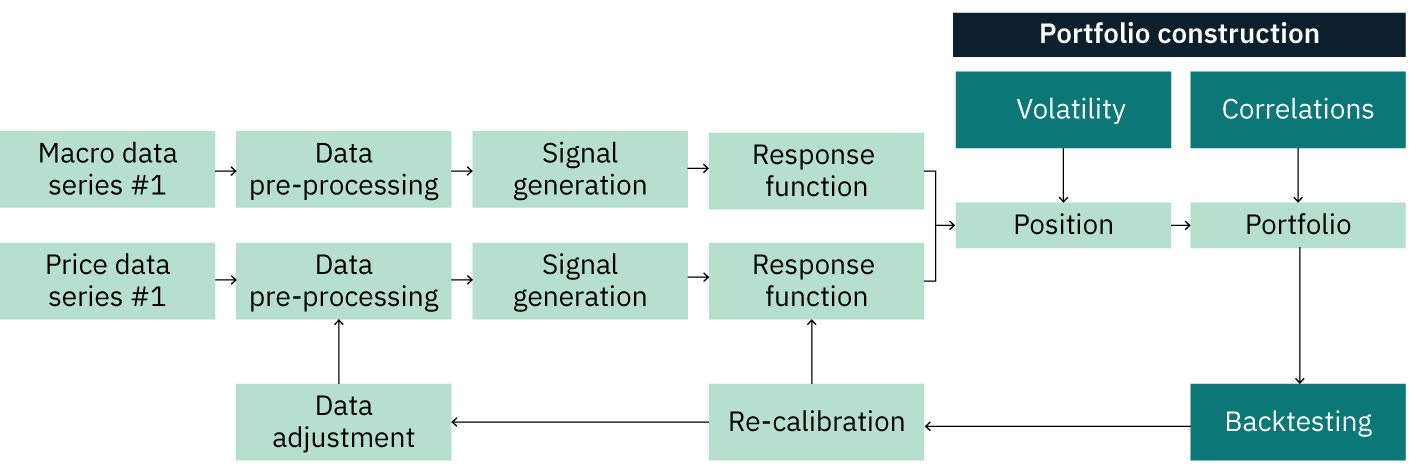
There are also strategies that invest using a signal-driven process. Signals are similar to factors; however, they may not be based on economic intuition, ranging from simple trend-following to using satellite data to track retail foot traffic. The concept of a signal becomes more abstract when the underlying data has statistical methods applied to it that create signals from patterns in the data that aren’t truly observable. Pairing these opaque signals with optimisation algorithms and automated trading processes results in the fully systematic process that is stereotypical of strategies in this space.
Common types of signals used by systematic strategies
The argument for systematic strategies
The growing presence of systematic strategies in the investment world is reasonable. Where humans tend to be emotional, inconsistent, and time constrained, rules-based systems do not fall victim to any of these pitfalls.
Rules-based systems remove emotion entirely from the investment decision-making process. When markets are tumultuous or overly optimistic, systematic strategies don’t suffer from sentiment and will continue to execute according to their established process. The ability to consistently execute the same strategy day in and day out across the investment universe is a comparative advantage relative to high-touch discretionary strategies. This cold execution has been shown to be beneficial to returns over time, avoiding holding onto losers and capitalising on their winners without attachment.
Applying a consistent rules-driven process across the entire investment universe provides scale that is unattainable under a discretionary approach. This scale is achieved through the repeatability of the process and the simple fact that a machine does not fatigue. The industry term for this scale is ‘breadth’, and breadth has been shown to be a source of return. The logic for this is that by being able to assess more of the investment universe, return generating opportunities are more frequently identified.
Investors are fee sensitive, and with good reason given the evidence that many fund managers struggle to outperform the index over time post fees. Systematic strategies offer an attractive alternative with fees in mind, as execution may be automated and the hours of labour required to produce an output are lower. These fee differences can then compound over time and have the potential to provide better long-run after fee returns than many discretionary focused strategies.
The architecture of a systematic strategy
The argument against systematic strategies
Despite their efficiencies and lack of emotional biases, systematic strategies are not bullet-proof. Fundamentally, models are built on historical data, and investors would be well aware of the “past performance is not indicative of future results” disclaimer that proliferates product footnotes. By calibrating to and relying on historical market structures to hold, systematic strategies can be slow to react when market regimes shift, and different factors/signals are rewarded and the underlying relationships change.
Similarly exposed to regime shifts is the phenomenon of factor crowding. As quantitative techniques have become more accessible, many systematic strategies have converged on similar signals. When everyone is investing based on the same signal, diversification is reduced and if you are a believer in efficient markets, any excess return potential disappears. The downside of factor crowding becomes blatant when correlations spike during periods of market stress, leading to strategies that once appeared uncorrelated to trend downwards in unison.
Outside of their inherent complexity, one of the largest issues in the ‘black box’ strategy landscape is the ‘backtesting’. Backtesting is a key tenet of strategy and signal development and refers to evaluating the performance of the proposed strategy using historical data. While an essential element of systematic strategies, backtesting is exposed to biases and the fact that the future may not reflect the past. The most consequential bias here is data mining bias. Data mining can occur where there is enough data that a near-perfect model can be made for the historical data, however as no real relationship has been captured, the model is merely fitting to random variation. A strategy suffering from data mining will be readily apparent if it has a backtested performance far superior to that of its realised track record. This point is the key takeaway, live returns that are net of fees and subject to transaction costs are the true evaluator of systematic strategy performance.
Blurring the lines between systematic and discretionary
Discretionary strategies occupy the other side of the investing coin. Human judgment still has a place in markets, with systematic strategies acting as a complement rather than a replacement. Interpreting management behaviour and geopolitical drama are two examples of pertinent market drivers where human touch is still required. Investment managers have spent entire careers honing their intuition for interpreting these types of events, something an algorithm reading a series of 1s and 0s cannot achieve, even if seemingly providing an answer.
Discretionary management has a natural home in areas where data is thin and the investment universe is small, illiquid, or opaque. Private credit, distressed debt, and complex special situations cannot be reduced to signals given the qualitative nature of the data, bespoke elements of individual deals and overall secrecy in private markets. In these relationship-centric corners of the market, discretionary is and will continue to be king.
This isn’t to say that discretionary strategies aren’t without their own shortcomings. The relative benefits of systematic strategies in terms of repeatability, consistency and zero emotion are very real and worth consideration. Managers operating a discretionary strategy wield a double-edged sword of sorts, with their unconstrained process and judgment capable of driving significant upside, while simultaneously being more exposed to emotional blunders that can tarnish reputations and track records for years.
Strategies are increasingly marrying the two concepts together, creating the Frankenstein’s monster-like term ‘quantamental’. This typically takes the form of systematic signal generation which are then subject to risk overlays, and finally human judgment verifying the proposed changes. This hybrid approach offers the breadth and repeatability of systematic models, while adding human guardrails to prevent any Terminator type situations.
The quantamental approach offers many benefits for investors constructing their portfolios. The two approaches are complementary, and allocation decisions should focus on the composition of both systematic and discretionary strategies within the portfolio, as opposed to naively selecting one or the other.
Summary
At their core, systematic strategies are rules-based processes free from human judgment. Defining these systematic as such is broad enough to include strategies ranging from index tracking funds to the stereotypical black box type strategies. Irrespective of where they fall on the spectrum, systematic strategies benefit from their immunity to human emotion, breadth of analysis, inability to fatigue and compounding cost efficiencies. The grass isn’t always greener though, and systematic strategies are also reliant on historical patterns repeating, leading to issues with regime sensitivity, factor crowding and data mining.
Discretionary strategies remain optimal in environments where the very word discretion is truly required. Relationship and judgment-driven spaces such as private markets can only be navigated by discretionary strategies, with trust being central to deal-making, in addition to the lack of available quantitative data.
As systematic strategies become more prevalent, the discussion should shift from a philosophical “which is better?” to a practical “how do these co-exist?”. Each of these approaches can have a role in a portfolio and shouldn’t be considered in isolation. This is the main message for allocators and investors, rather than fearing systematic strategies or being a systematic evangelist, the goal should be finding the optimal mix of discretionary and systematic strategies to achieve your investment objectives.