
We're a Baker Tilly network member
About Baker Tilly
Back to top
August 2026

Business Radar 2026 Understanding the businesses that drive Australia's economy

The Business Radar report canvasses the trends, challenges and opportunities experienced by Australia’s middle market businesses. Independently commissioned, our most recent survey captured the sentiment of nearly 316 owners and leaders across a range of growth stages, states and industries.

This report examines how economic pressure, changing buyer behaviour and AI-enabled experiences are reshaping customer expectations. Businesses are being asked to deliver faster service, higher quality and greater value, while protecting profitability and sustaining growth.

Key findings

  • 65% of businesses report customer expectations have increased over the past two years. 
  • 56% would prioritise quality over speed or price when forced to choose. 
  • 45% say rising customer expectations are creating pressure on pricing, margins and profitability. 
  • 54% say customer expectations are changing how they interact with suppliers and partners. 
  • 73% say they are fairly or fully ready to adopt and scale AI. 

Read on to understand how customer expectations are reshaping the middle market and the practical actions your business can take to respond sustainably and profitably.

August 2026

Business confidence

Technology and productivity drive confidence

Despite softer confidence in broader economic conditions, middle market business leaders remain optimistic about their own prospects, rating future success at 8.15 out of 10 and current success at 7.98.

Confidence in the broader economy has retreated to early 2025 levels, reflecting ongoing economic and geopolitical uncertainty.

Top factors influencing confidence

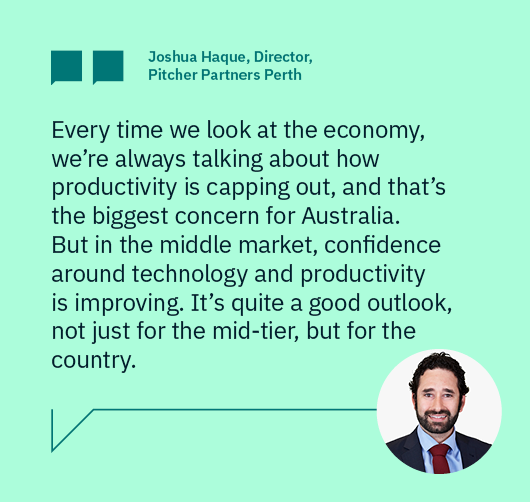
This survey highlights a notable shift in what is driving confidence. Adoption of new technologies (38%) and improved productivity (37%) have overtaken increased demand as the leading positive influences on business confidence.

Increased demand for products and services has dipped to 36% from 42% in the previous survey, but still well in front of the fourth and fifth place factors.

Money on the mind   

The top negative factors impacting business costs all follow the same theme: mounting financial pressure. Remaining at the top at 36% is inflation, then the related category increased operating costs (32%), and two new categories, economic slowdown and recession risk (22%).

 

AUGUST 2026

The informed and demanding customer

Customers want more. Can businesses keep up?

Researched, prepped and expecting much, much more.

Middle market businesses are facing a new challenge. Customers are increasingly informed, price sensitive and accustomed to digital experiences that promise instant answers, fast service and personalised support.

Nearly two-thirds (65%) of businesses report customer expectations have increased during the past 24 months.

While AI is helping accelerate these changes, the research suggests economic pressures are playing an equally significant role. Cost-of-living pressures and increasing price sensitivity were both nominated by 46% of respondents as drivers of changing expectations.

Change in customer expectations in the last 24 months

The impossible customer trade-off 

Today’s customers often expect three things at once:

  • Faster responses
  • Higher quality
  • Lower prices

However, most businesses cannot sustainably deliver all three. When forced to choose, 56% of business leaders prioritised quality, compared with 13% who chose speed and 12% who chose price.

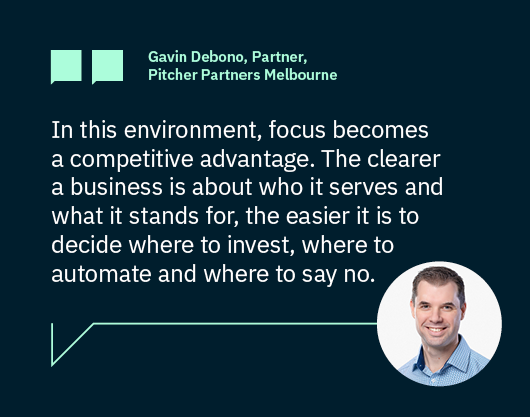
Rather than entering a race to the bottom, successful businesses are becoming more deliberate about who they serve, the value they provide and where they choose to compete.

How have customer expectations increased?

Bridging the expectation gap is a matter of survival 

This shift in attitude over just two years coincides with the widespread adoption of large language models (like Claude or ChatGPT) and other tools powered by generative AI.

We are witnessing, in real time, the arrival of the AI-powered customer. Customers now have instant access to what feels like objective and expert insight, helping them research and compare options in seconds.

Sending pain down the supply chain

Rising expectations are affecting more than customer service. Businesses are feeling pressure on profitability, suppliers, technology, delivery performance and internal capacity. More than half (54%) report changing how they interact with suppliers and partners as a result.

Customer expectations now require coordinated responses across pricing, technology, operations and governance, rather than isolated customer service improvements.

Perception around AI

AI readiness is increasing but readiness is more than technology

AI readiness has increased significantly, with 73% of businesses now saying they are fairly or fully ready to adopt and scale AI.

However, the report highlights that readiness should be measured not simply by technology adoption but by whether AI supports customer strategy, reliable data and business decision-making.

Use a customer-value filter before investing in AI

Before adopting a new AI tool, test it against five questions:

  1. Which customer expectation does this address? Speed, quality, price, personalisation, transparency or convenience?
  2. Does it support our chosen position? For example, premium expertise, fast delivery, specialist advice or best-value service?
  3. What human work will it improve, not just replace? Consider whether AI frees people to spend more time on judgement, relationships and problem-solving.
  4. What could go wrong for customer trust? Identify where disclosure, review or human oversight is required.
  5. How will we measure commercial return? Track margin, repeat business, service resolution, customer satisfaction or productivity, not just adoption.

AI organisational readiness

AI-efficiency is not without risk

Global research from YouGov and Meltwater suggests that AI content isn’t acceptable to audiences in all areas.

Fewer than 39% of customers find the use of AI acceptable in customer service, and 32% say they would trust a brand less if they knew its content or communications were AI-generated.
 

Actions to take

  1. Define your ideal customer. Be clear about who you serve best, what they value and which demands sit outside your strategy.  
  2. Choose your position: speed, quality or price. Decide where you will compete and align service, pricing and technology decisions to that choice. 
  3. Prove the value behind your price. If you charge a premium, make the evidence easy to find. Use reviews, testimonials, service guarantees etc, and deliver on your promises. 
  4. Turn feedback into a decision system. Do no collect feedback unless you have a process to assess, prioritise and act on it. 
  5. Use AI to strengthen customer experience, not disguise weaknesses. Avoid using it as a superficial fix for unclear processes, under-resourced teams or poor service design. 
  6. Measure AI return beyond productivity. Track whether AI is improving margin, quality, customer retention, speed to resolution or staff capacity. 
  7. Build supplier partnerships instead of passing on pressure. Identify ‘homeless’ tasks that could be shifted from finance to another, and capture key processes, systems and decision logic. 
  8. Make trust your competitive advantage. Focus on building the assets competitors can’t easily replicate: trusted relationships, recognised expertise, a strong reputation and a consistent brand experience. 
APRIL 2026

The modern CFO: steward, strategist and problem solver

How the middle market CFO role is expanding and the risks business leaders need to manage

More than a finance leader  

While all C-suite executives are essential to successful business management, the CFO’s oversight relates to business performance in the most direct way. Cash flow, margins and runway define whether a business can operate or not. CFOs set hard limits on what’s possible.

Given this broad position and breadth of foundational skills, it’s no surprise that 82% of our middle market business leaders say the role is taking on responsibilities beyond traditional finance.

Almost half of respondents said their CFOs took care of risk, governance and compliance, with a further third naming data and analytics, and tech and digital oversight.

The catch-all exec 

This step-change in responsibility is coming from increasing regulatory and compliance requirements (62%), growth and business complexity (60%), and advances in AI and automation (59%).

While distinct executive roles remain the most common structure (43%), most organisations (57%) operate with one person managing blended or overlapping roles. This vagueness could be adding to the issue of the CFO as a catch-all: if accountability lines or roles are blurred, responsibility tends to default to finance, reinforcing the CFO’s position as a default point of responsibility.

Who’s the CFO 

More than half (57%) of businesses have either a dedicated CFO or another senior finance leader overseeing financial leadership and decision-making. In 35% of organisations, that responsibility fell to the CEO or owner. 


Future CFOs need to build on accounting foundations

The CFO’s role expansion is not seen as a short-term fix, but a broader long-term evolution. Of those surveyed, 78% believe finance leaders will take on greater responsibility for technology, data and automation in the future, while 63% expect them to step further into wider, non-financial leadership roles.

The top skills leaders expect will be needed: technology, data and AI literacy (54%), cross-functional working (33%) and ongoing skills development (31%).

Risk of over-reliance 

Many organisations manage well with their finance leader overseeing everything from IT to ESG reporting. Respondents see benefits: diverse thinking (86%), improved cross-departmental alignment (84%), faster decision-making (84%) and strategy grounded in operational and financial reality (81%). 

However, respondents appear less cognisant of the downsides, with only 39% naming unclear accountability, 35% succession risks and 32% difficulty replacing talent. 

Warning signs of an overloaded CFO 

Don’t wait for a complete system failure. Signs to watch for: 

Succession risks 

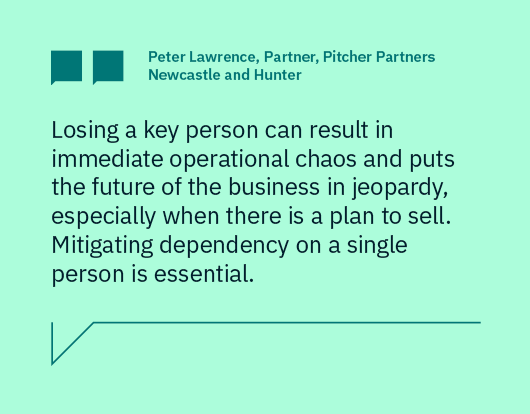
When CFOs manage multiple critical functions, it amplifies key-person risk. This only becomes apparent when they move on, taking their domain knowledge and skill with them. If the role becomes too broad, filling it can be increasingly challenging.

Actions to take 

Deliberately position CFOs as strategic leaders

Empower your finance head to lead across the business, not just within finance.  

Build capability beyond finance 

Upskill and hire for interpersonal abilities, data, technology and commercial leadership. 

Avoid finance becoming the default owner of everything

Clearly define accountability for areas like ESG, IT and compliance. 

Use specialist support to bridge capability gaps

Consider outsourced or specialist support in complex or high-risk areas – particularly during periods of growth, transformation or leadership transition.

Watch for early warning signs

Stalled projects, delayed reporting, limited insight into business performance, lack of real-time data, or key talent attrition may signal that expectations on the CFO have outpaced capacity

Reduce reliance on any one individual

Mitigate key person risk by documenting knowledge, building team capability and planning succession early. 

Meet our middle market businesses

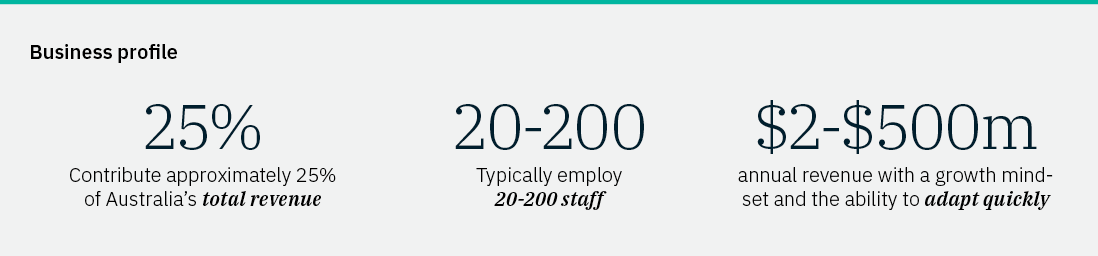
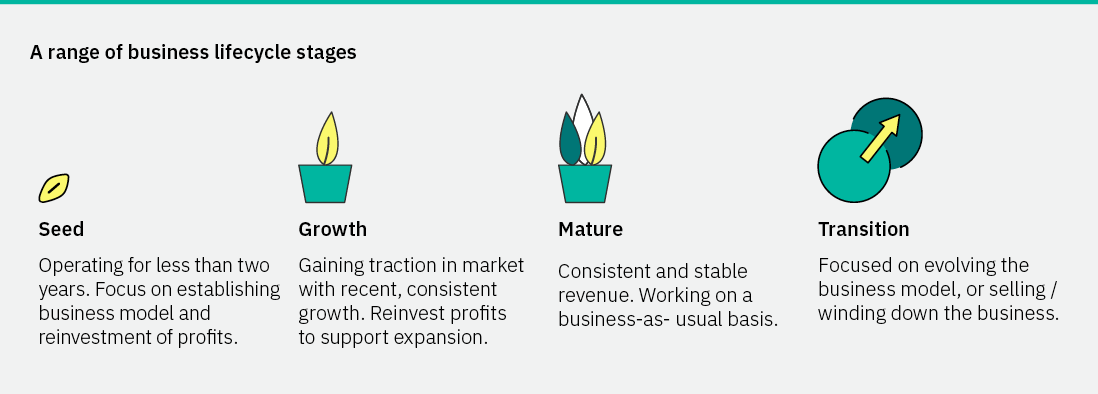
This report defines middle market businesses as typically employing 20–200 people with annual revenue of $2–$500 million. While their operating models, sizes and industries vary widely, these businesses can be categorised into four lifecycle stages.
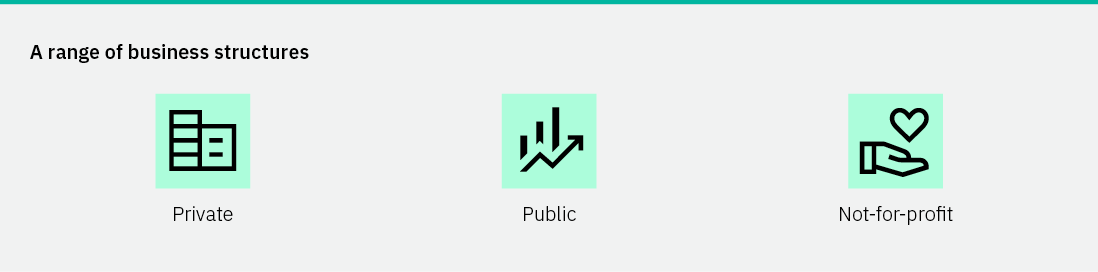
A range of business structures: Private, Public and Not-for-profit

A range of business lifecycle stages: Seed (<2years operating), Growth (Gaining traction), Mature (consistent and stable), Transition )focus on evolving)

Business profile 25% 20-200 $2-$500m Contribute approximately 25% of Australia’s total revenue Typically employ 20-200 staff annual revenue with a growth mindset and the ability to adapt quickly

Our experts

asdfafsdfa Jyotika Rangel

Jyotika Rangel

Partner

Sydney


View profile
asdfafsdfa Peter Lawrence

Peter Lawrence

Partner

Newcastle and Hunter


View profile
asdfafsdfa Gavin Debono

Gavin Debono

Partner

Melbourne


View profile
asdfafsdfa Chris Hanna

Chris Hanna

Principal

Adelaide


View profile
asdfafsdfa Anthony Kazamias

Anthony Kazamias

Partner

Brisbane


View profile
asdfafsdfa Joshua Haque

Joshua Haque

Director

Perth


View profile
asdfafsdfa Frank Russo

Frank Russo

Partner

Melbourne


View profile

Thank you for you interest

How can we help you?

Business or personal advice

By submitting this form you agree to our privacy policy

General information

By submitting this form you agree to our privacy policy

Career information

By submitting this form you agree to our privacy policy

Media enquiries
Contact expert
Become a member
Specialist query
Please provide as much detail to ensure appropriate allocation of your query
Please highlight a realistic time frame that will enable us to provide advice within a suitable and timely manner. Please note given conflicting demands with our senior personnel, we will endeavour to respond to you within the nominated time frame. If you require an urgent response, please contact us on 03 8610 5477.
Responses to queries submitted via this form (“Response”) are produced by Pitcher Partners Advisors Proprietary Limited and are prepared for the exclusive use and benefit of those who are invited, and agree, to participate in the CRITICAL POINT NETWORK service. Responses provided, or any part thereof, must not be distributed, copied, used, or relied on by any other person, without our prior written consent. Any information provided is intended to be of a general nature and prepared without taking into account your objectives, circumstances, financial situation or particular needs. Any information provided does not constitute personal advice. If you act on anything contained in a Response without seeking personal advice you do so at your own risk. In providing this information, we are not purporting to act as solicitors or provide legal advice. Any information provided by us is prepared in the ordinary course of our profession and is based on the relevant law and its interpretations by relevant authorities as it stands at the time the information is provided. Any changes or modifications to the law and/or its interpretation after this time could affect the information we provide. It is not possible to guarantee that the tax authorities will not challenge a transaction or to guarantee the outcome of such a challenge if one is raised on the basis of the information we provide. To the maximum extent permitted by law, Pitcher Partners will not be liable for any loss, damage, liability or claim whatsoever suffered or incurred by any person arising directly or indirectly out of the use or reliance on the information contained within a Response. We recommend you seek a formal engagement of our professional services to consider the appropriateness of the information in a Response having regard to your objectives, circumstances, financial situation or needs before proceeding with any financial decisions. Pitcher Partners is an association of independent firms. Pitcher Partners is a member of the global network of Baker Tilly International Limited, the members of which are separate and independent legal entities. Liability limited by a scheme approved under professional standards legislation.
CPN Enquiry
Business Radar 2026
Dealmakers 2026
Federal Budget 2026–27
Search by industry