

Key points
- Use AI for repetitive, data-heavy tasks
- Engage advisors for nuanced, high-stakes situations
- Combine AI for data processing with advisors for interpretation and change management
- Projects involving compliance, governance, or reputational risk require human expertise
Resourcing a project is one of the most important decisions you make and it’s often one of the trickiest. You have a project to deliver, a budget to manage, and a choice to make: do you invest in an AI tool or bring in advisors?
Interestingly, recent research from the University of Queensland Business School reveals that more than 80% of AI projects fail. However, the reason for the failure attributed in the research is not technical, but managerial. It adds that these projects often don’t work due to poor problem definition and weak governance. It is a timely reminder that project success relies not just on having the right tools but knowing how to resource it correctly: knowing when AI tools can help, and knowing when you need to get advisors in.
Getting the resourcing right means faster decisions, fewer missteps and more confident execution. Whether it’s a new launch, transformation initiative or your next growth project, the right resourcing model unlocks both speed and substance without compromising on quality or outcomes.
So how do you make the right call? Here are six practical questions to help guide your resourcing strategy.
1. Is the task repetitive and data-heavy? Let AI take the lead.
AI is well-suited to predictable, rule-based tasks including report formatting, grouping customer feedback, analysing structured survey data, data cleaning, invoice classification or basic forecasting. It shines when the rules are clear, and the work is high volume and low judgement. But even the best tools need clean data, clear parameters and careful oversight. Without the right inputs and sound judgment, even simple tasks can go off track.
2. Are emotions, politics or nuance involved? Bring in advisors.
No machine can replace emotional intelligence, contextual judgement or the ability to navigate complex relationships. When the stakes are high, experienced advisors help guide decisions and encourage collaboration between all stakeholders.
Advisors can add real value in these moments, drawing on their experience across industries to support strategy development, manage sensitive restructures, navigate regulatory processes, and engage stakeholders effectively.
According to the UQ research, “lack of strategic alignment and business ownership” is a major reason AI fails in real-world settings.
3. Do you need both speed and strategic insight? Use a blended approach.
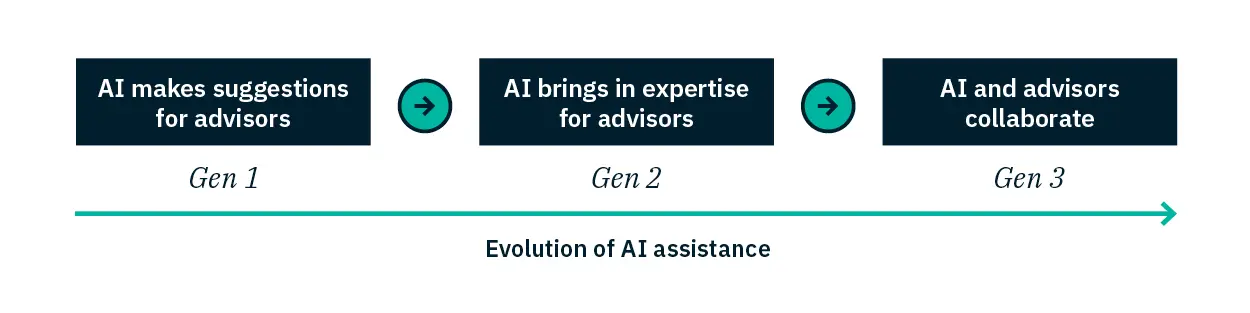
Many successful projects use AI for data processing and advisors for sense-making. For example, use AI to identify trends, then bring in experts to interpret the results, guide the implementation, and manage change across teams.
This approach brings together the best of both. It brings together the efficiency of AI with the critical thinking and flexibility of advisors.
4. Could a misstep create compliance or reputational risk? Don’t go it alone.
If your project touches areas like payroll, tax, governance or cybersecurity, expert oversight isn’t optional, it’s essential. While tools can support execution, they don’t carry the responsibility for errors. Your business does. If you need a defensible audit trail, are navigating regulatory or legal exposure, or managing issues that impact customer or workforce trust, bringing in the right expertise helps protect both your reputation and your bottom line. As IBM famously put , “a computer can never be held accountable, therefore a computer must never make a management decision.”
5. Is this a one-off or a repeatable process? Resource accordingly.
AI tools are ideal for repeatable tasks that occur regularly like weekly forecasting or data wrangling. But for one-time or high-impact strategic projects, hiring external expertise may be more cost-effective and lower risk.
Use the best of both: invest in tools when you plan to build long-term internal capability, the task is ongoing and scalable. But bring in advisors when it’s a short-term or specialised project, and you need industry knowledge or cross-functional experience.
6. Have you learned from past projects? Advisors bring perspective.
Every project is a chance to improve. Earlier, maybe AI delivered speed but lacked flexibility, or the advisors’ judgement helped resolved complex challenges. Reflecting on what worked and what didn’t will help you build more balanced, effective resourcing plans.
Advisors bring these lessons with them, drawing on experience across industries and project types. Engaging the right expertise early can set your project up for success from the start.
Final thought: it’s a mix, know your ratio
The best project outcomes don’t come from picking AI or human input. They come from knowing which to use, when, and how to bring them together. With the right resourcing model in place, you can unlock both speed and substance without compromising on quality or outcomes.